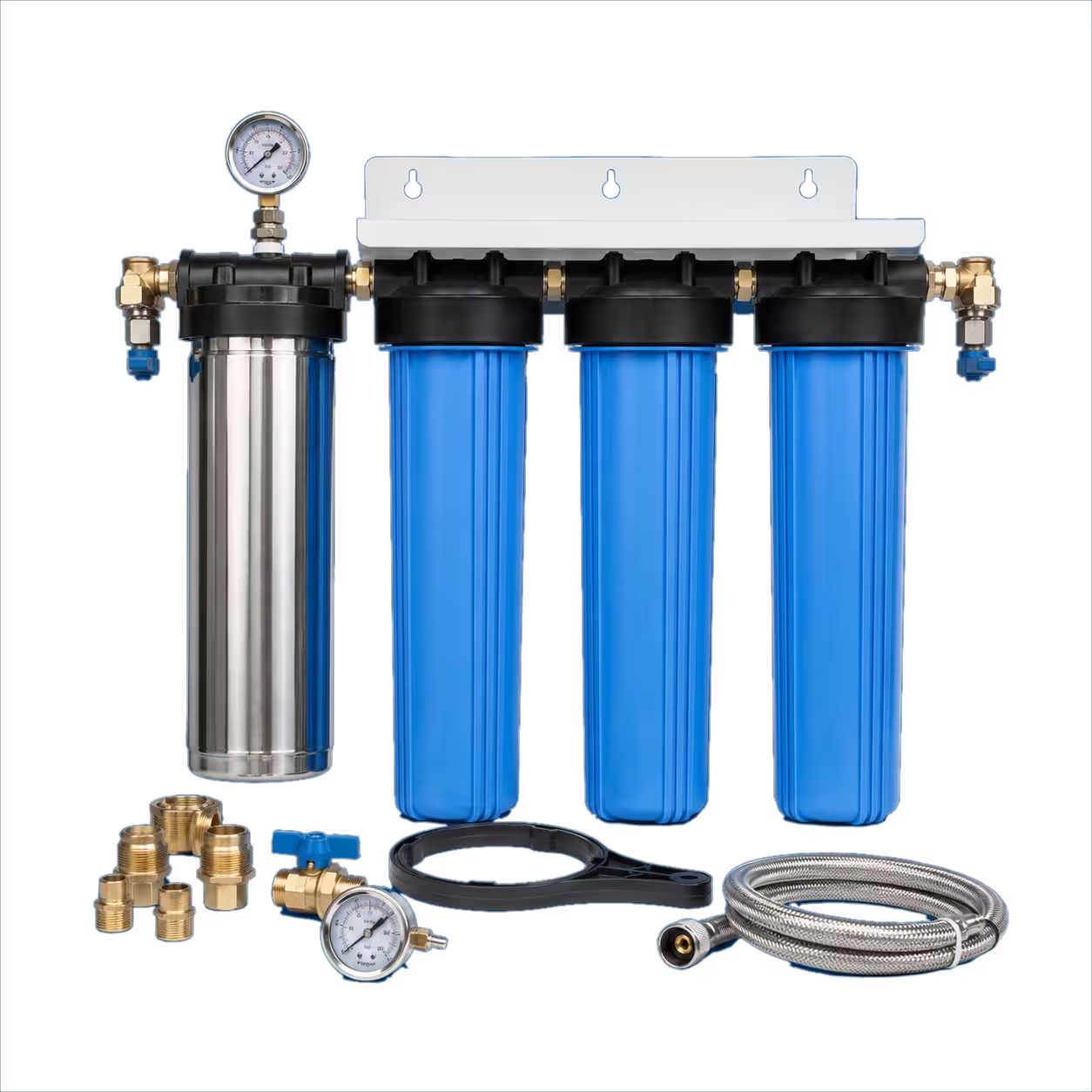
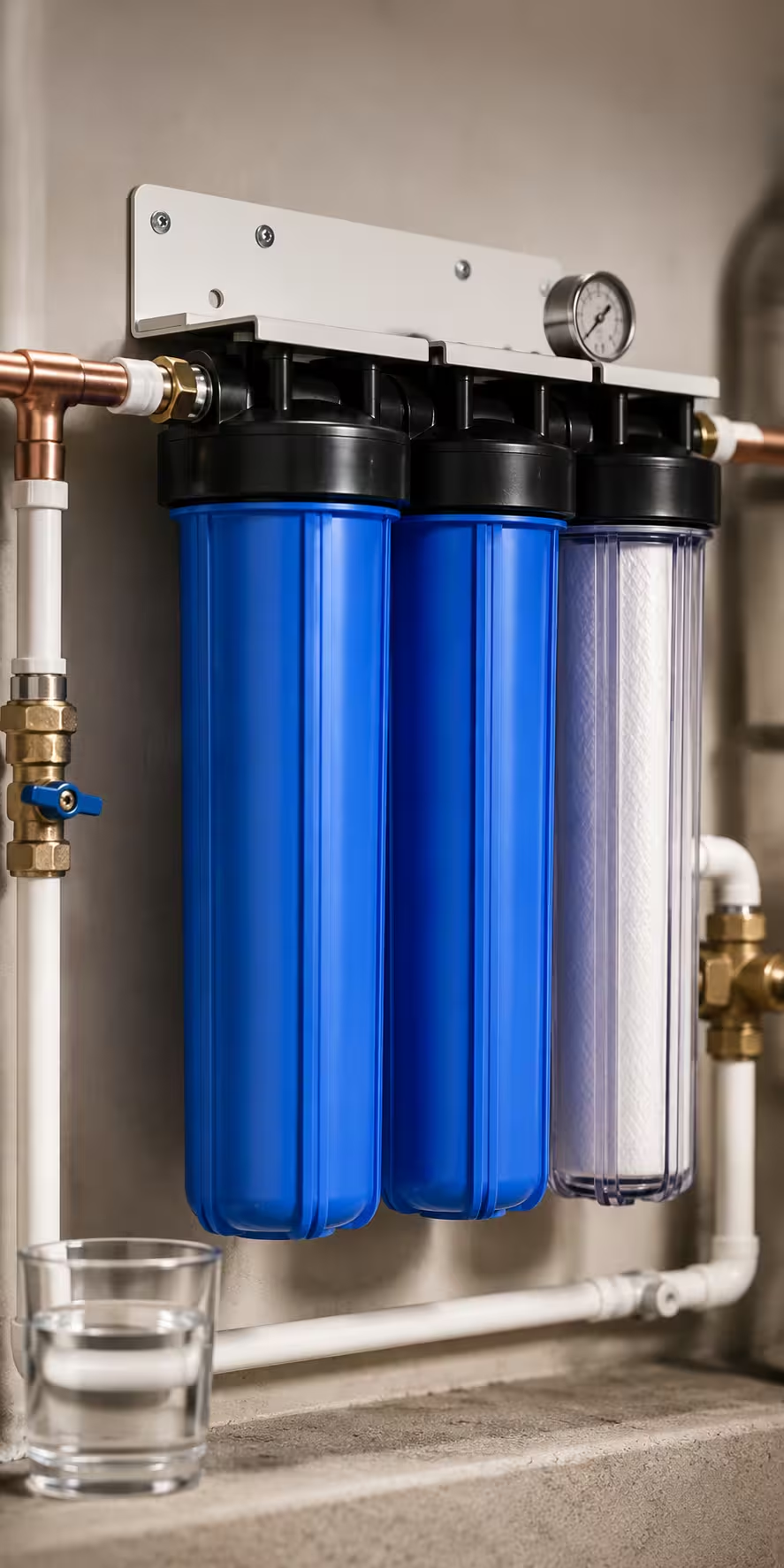
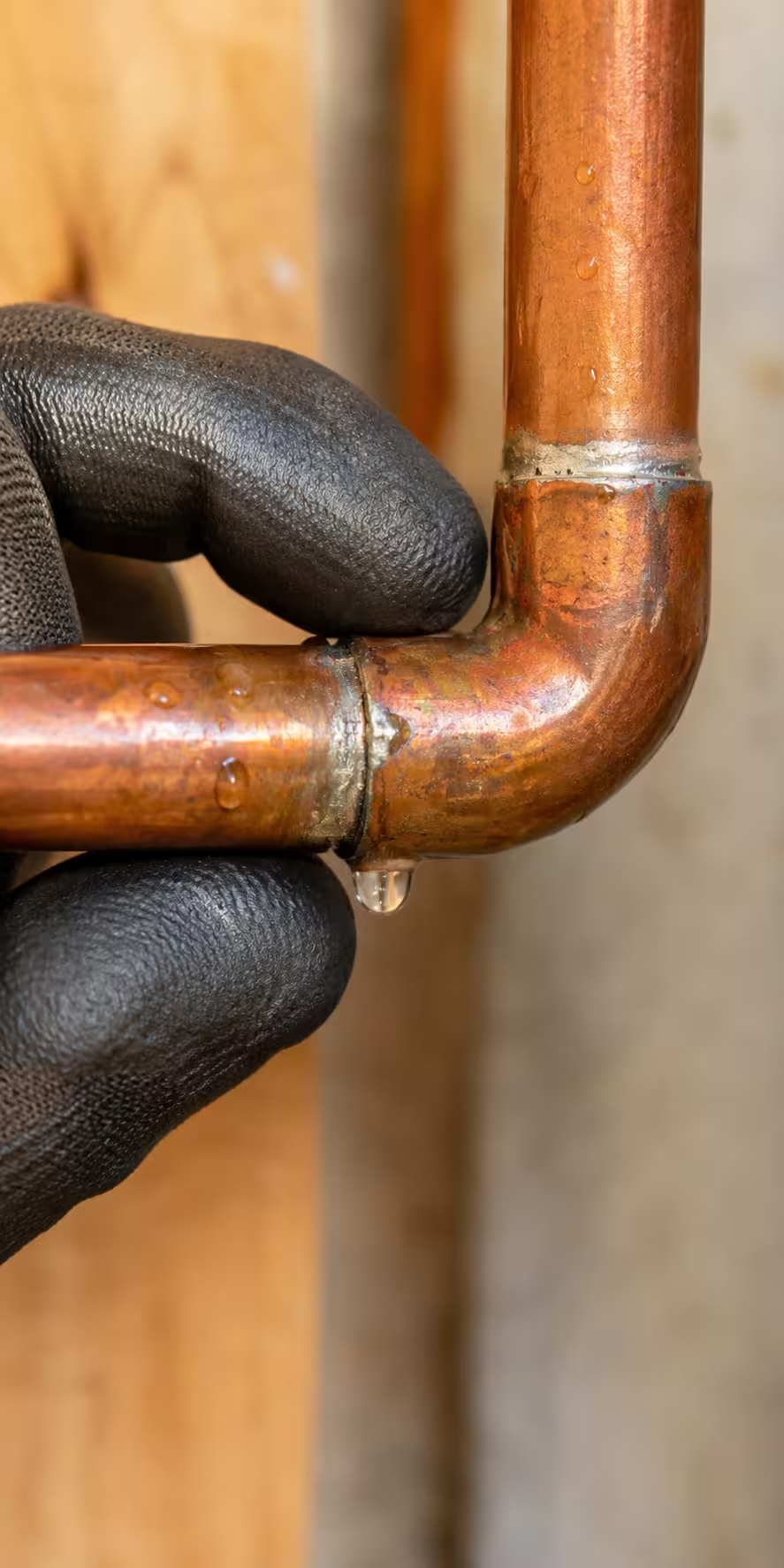
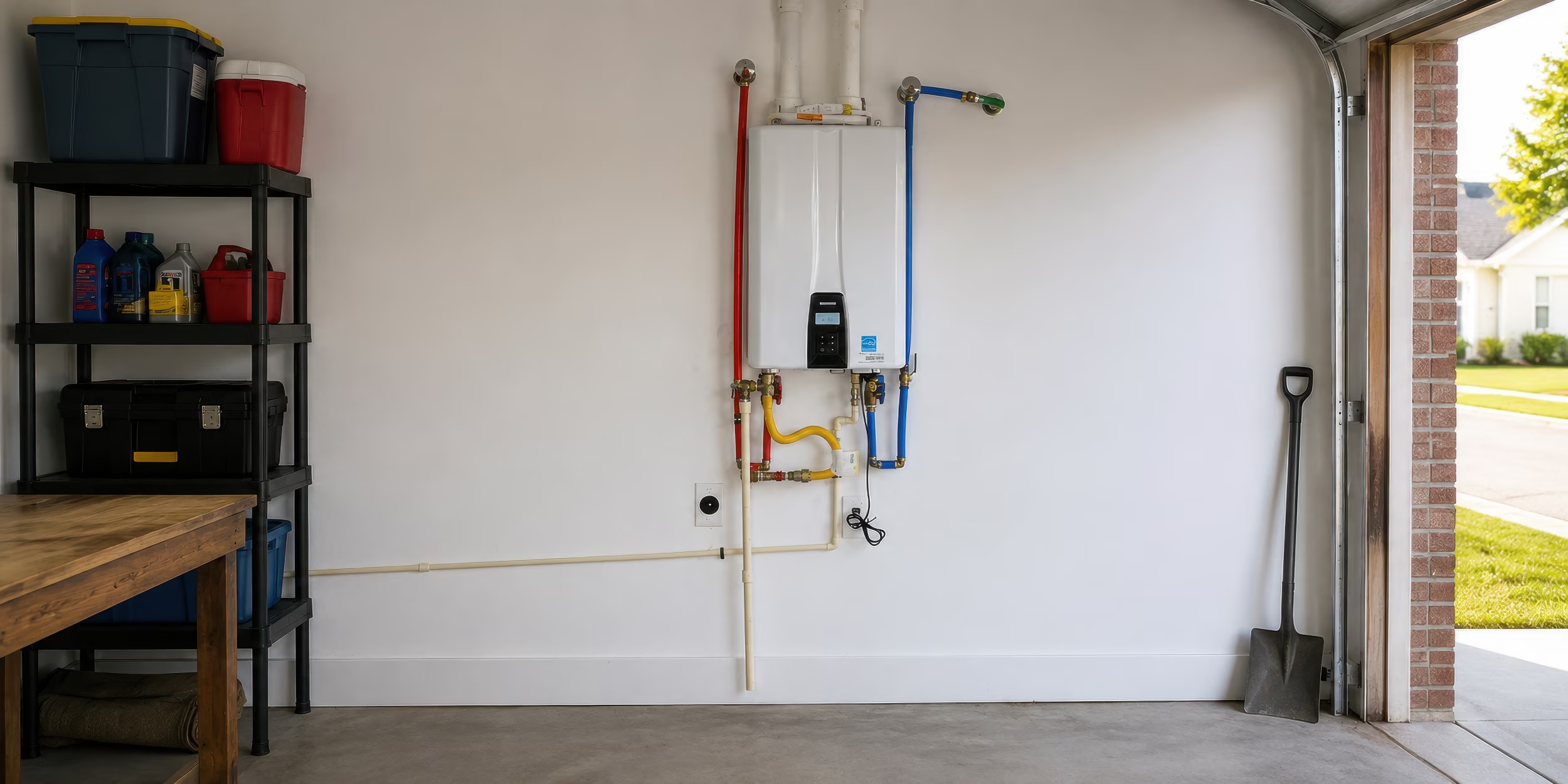
If sediment, taste, odor, or staining affects water throughout your home, the right filtration system starts with understanding the cause. Gotta Go Plumbing helps homeowners across our service area review their water source, choose appropriate equipment, and install a whole house water filter with the flow, pressure, valves, and service access planned correctly.
A whole-house filtration system treats water near the point where the main water supply enters the home, before it reaches most fixtures. That can make sense when sediment, taste, odor, or another confirmed condition affects more than one tap. If the concern is limited to drinking and cooking water, a point-of-use filter may be the more practical choice.
No single type of filter removes everything. We start with the water source, symptoms, and appropriate testing, then match the equipment and certified reduction claims to your filtration needs. A water softener treats scale-forming minerals; it is not a substitute for contaminant-specific filtration.
When Is Whole-House Filtration Worth Considering?
A building-wide concern is the strongest reason to consider whole-house filtration. Before installing equipment, rule out a single fixture, an aging water heater, or a short-term utility issue and identify what the filter is expected to reduce.
Signs filtration may help
Visible sediment appears at several fixtures or cartridges clog quickly.
Taste or odor is present in both hot and cold water throughout the home.
Well water leaves recurring iron or manganese staining after testing confirms the cause.
Municipal water has an aesthetic concern you want treated at the point of entry.
A current test identifies a condition with an appropriate whole-house treatment option.
An existing whole house filter leaks, restricts flow, or no longer meets the household's needs.
What we check first
Whether the home uses city water or a private well.
Water test results and the exact concern the system should address.
Peak water usage, pipe size, water flow, and available water pressure.
The main water line, shutoff valve, and possible bypass location.
Space to mount the filter bracket and reach every filter housing.
Whether a softener, UV purifier, point-of-use filter, or plumbing repair is the better fit.
Choose Filtration Around the Water Test
Sediment Filtration
Best for: Visible particles, sand, silt, or protecting downstream treatment equipment when testing supports that need.
Considerations: Micron rating, filter cartridge capacity, pressure drop, and filter changes must match the water conditions and demand.
Carbon Filtration
Best for: Certain taste, odor, chlorine, or organic-chemical reduction goals covered by the selected product's certified claims.
Considerations: A carbon filter has finite capacity and is not a universal treatment for bacteria, nitrates, minerals, lead, or PFAS.
Test-Based Multi-Stage System
Best for: Homes with more than one confirmed concern or well water systems that need treatment in a specific order.
Considerations: Each stage adds flow, maintenance, space, and cartridge requirements. The treatment train should follow the test results.
What Determines the Right Home Water Filter System?
We evaluate
What we review
Why it matters
Water source
Municipal supply or private well
Sets the testing context and likely treatment questions
Test results
Confirmed conditions and reduction goals
Keeps the recommendation tied to evidence
Filter claims
Product model and relevant NSF/ANSI claims
Shows what the selected system is certified to reduce
Flow and pressure
Pipe size, peak demand, and incoming pressure
Helps avoid reduced water pressure at busy times
Installation location
Main supply, bypass, wall support, and service clearance
Makes the system practical to install and maintain
Maintenance
Cartridge life, filter wrench access, and service schedule
Keeps filter replacement realistic for the household
What Professional Water Filter Installation Includes
Installing a whole-house water filter means more than connecting a canister. The equipment must be supported, oriented for correct flow, sized for demand, and accessible for safe filter changes.
Point-of-entry placement
We plan the system near the main water supply line and after the primary shutoff, with the water heater and any softener or UV equipment arranged in the right sequence for the home.
Flow and pressure planning
The filter housing, ports, pipe size, and cartridges must support household demand. We review pressure before installing a whole house water system that could create an unnecessary restriction.
Supported plumbing and bypass valves
We isolate the water supply, plumb the inlet and outlet in the correct direction, support the assembly, and install a bypass when the approved design calls for one. That allows future service without treating every filter change like a new installation.
Flush, leak, and operation checks
After installing the filter, we restore the main water slowly, check each valve and connection for a leak, flush new media as directed, and confirm water runs clear before the system is placed in service.
A maintenance walkthrough
We identify the cartridge schedule, show how the bypass works, explain what pressure changes may mean, and leave you with the manufacturer's maintenance instructions.
Our Whole-House Water Filter Installation Process
This is an overview of professional installation, not a step-by-step DIY installation guide. The final plan follows the selected equipment, the home's plumbing, and applicable Kentucky requirements.
1
Review the Water
We discuss the water source, symptoms, existing treatment, and current test results. If the water has not been tested, we explain what information is needed before selecting equipment.
2
Match the Filter
We compare the treatment goal with product capacity, certified claims, household flow, and expected cartridge life.
3
Plan the Location
We inspect the main water supply line, shutoff valve, wall support, bypass arrangement, service clearance, and permit needs.
4
Plumb the System
We shut off the supply, make the approved pipe changes, mount the filter bracket, and connect the system in the correct water-flow direction.
5
Flush and Test
We restore water gradually, inspect for leaks, flush the cartridges or media, and verify usable pressure with the system running.
6
Explain Filter Care
We review filter changes, bypass use, leak checks, pressure-drop warning signs, and maintenance tips to keep the equipment serviceable.
Testing and Kentucky Installation Considerations
A home water filtration system should be selected for a documented concern and installed under applicable plumbing requirements. Filtration also does not replace public-health instructions during a boil-water advisory.
Kentucky plumbing alterations may require a permit and inspection path before installation.
Private-well owners should arrange routine testing and retest after flooding, repairs, or a change in water quality.
Follow utility and health-department directions during a boil-water advisory, even when filtered water is available.
Use the exact product model's certified claims instead of assuming one filter treats every contaminant.
What Affects Water Filtration System Installation Cost?
Cost depends on the treatment goal, equipment, access, plumbing changes, pressure conditions, and maintenance setup. We inspect the home and explain the proposed scope before work begins.
Water testing and equipment
The number of treatment stages, housing size, certified reduction claims, and replacement cartridges shape equipment cost.
Main-line plumbing
Pipe material, diameter, shutoff condition, bypass valves, and the amount of supply-line work affect labor and materials.
Space and access
Wall support, tight clearances, relocation of nearby plumbing, and room for future filter changes can expand the scope.
Pressure and existing treatment
Pressure correction, a water softener, old equipment removal, or a test-based multi-stage layout can change the installation plan.
Water Filtration Planning Across Our Service Area
Gotta Go Plumbing helps homeowners across western Kentucky and southern Indiana plan whole-house filtration around the property's actual water. City water and private wells raise different questions, and the right system depends on the concern, test results, flow, pressure, and available space. We explain what the proposed filter can and cannot address, then provide a practical installation and maintenance plan.
Municipal-water homes
Private-well properties
First-time whole-house filtration
Existing-system replacement
Filtration and water-softener planning
The final recommendation depends on water-source information, test results, the selected product's certified claims, household demand, pipe size, pressure, access, and applicable permit requirements.
Related Water and Plumbing Services
Compare water softening, broader water-quality planning, and plumbing help when the concern extends beyond filtration alone.
Questions About Installinga Whole-House Water Filter
Straight answers about testing, filter selection, professional installation, maintenance, water softeners, well water, and treatment limits.
Not automatically. Municipal water is treated to public standards, but some homeowners want to reduce a building-wide taste, odor, sediment, or other condition covered by a specific filter's certified claims. Start with the concern and available utility information or testing. If the goal involves only drinking and cooking water, a point-of-use filter may be more practical than treating all the water entering your home.
Water testing is often a smart step before choosing filtration equipment, especially if the concern involves odor, taste, discoloration, well water, or a problem that may have more than one cause. Testing can help separate a true water-quality concern from a plumbing issue such as an aging water heater, mineral buildup at a fixture, or old supply piping. A plumber can help you understand what symptom belongs to the plumbing system and when outside water testing or treatment planning makes more sense.
That depends on the type of filter and the exact product model. A sediment filter targets particles. Certain carbon systems may reduce chlorine, taste, odor, or listed organic chemicals. One whole-house filter does not automatically remove bacteria, nitrates, dissolved minerals, lead, PFAS, or every other contaminant. Match the equipment's certified reduction claims to a water test and the condition you want to address.
No. A water softener primarily treats scale-forming calcium and magnesium. A filtration system uses media or a filter cartridge to reduce specific particles, chemicals, tastes, or odors. Some homes need one, some need both, and others need a different treatment approach. Water testing and the home's symptoms help determine the right order and equipment.
It is usually installed at the main water supply after the primary shutoff so filtered water can reach fixtures throughout the home. The installation location also needs enough support and clearance to reach each filter housing, use a filter wrench, operate the bypass valve, and complete future filter replacement. Existing treatment equipment and the water heater must be placed in the correct sequence.
Installing a whole-house water filter usually means altering the main water line, supporting heavy filter housings, planning a bypass, and checking flow, pressure, and leaks. Kentucky plumbing alterations may require a permit, and manufacturer installation instructions still apply. Professional installation is often the practical choice when the work requires cutting the main supply line or coordinating more than one treatment device.
No. Follow the water utility, health department, or emergency authority's instructions during a boil-water advisory. A home filter should not be treated as permission to ignore those directions unless the responsible authority explicitly says otherwise. After an advisory, follow the filter manufacturer's guidance for flushing or replacing cartridges if required.
The schedule depends on the cartridge, water usage, sediment load, and manufacturer guidance. A pressure drop, change in taste or odor, or visibly loaded cartridge may signal that service is due sooner. Keep a record of filter changes, watch for leaks around the housing, and use the specified replacement cartridge rather than relying on one universal interval.